 English
 日本語
日本語 中文网站(繁体)
 Русский
 Bahasa Indonesia
 ภาษาไทย
 Tiếng Việt
 대한민국
대한민국
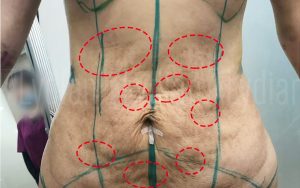
Undergoing a body contouring procedure is meant to boost confidence, but living with a compromised outcome can cause profound frustration. When fat removal goes wrong, patients are often left with visible waves, deep hollows, lumpy asymmetries, or skin that appears stuck directly to underlying muscle.
The good news is that botched liposuction results can be fixed. However, revision liposuction requires a fundamentally different medical approach than a standard first-time procedure. Understanding how corrective surgery works, when to schedule it, and why specialized expertise in Korea makes all the difference is crucial for restoring both your body contours and your peace of mind.
Contents
- 1. Common Signs of a Compromised Liposuction Outcome
- 2. Why Revision Liposuction Is Far More Complex Than Primary Liposuction
- 3. The Optimal Timeline: When Can You Undergo Revision Surgery?
- 4. How Lydian Clinic Reconstructs Botched Results in Seoul
- 5. What to Expect During Recovery After Revision Surgery
Common Signs of a Compromised Liposuction Outcome
Distinguishing between normal post-operative swelling and permanent surgical defects can be challenging during early recovery. However, once full tissue healing has taken place, several distinct indicators signal that a procedure requires surgical revision:
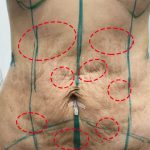
-Contour Waves and Ripple Effect: Alternating ridges and valleys caused by uncalibrated cannula passes through the superficial fat layer.
-Severe Dents and Tissue Depressions: Deep hollows resulting from over-extraction in isolated spots, where too much sub-dermal fat was removed.
-Fibrotic Adhesions and Scar Banding: Areas where skin has stuck down onto muscle fascia because the protective fat cushion was entirely scraped away, causing painful tugging or unnatural indentations during movement.
-Asymmetry and Unbalanced Proportions: Significant differences in volume, shape, or muscle transition lines between the left and right sides of the body.
-Persistent Bulges or Unextracted Fat Islands: Patches of dense fat left untouched next to over-extracted zones, accentuating surface irregularities.
Why Revision Liposuction Is Far More Complex Than Primary Liposuction
Primary liposuction involves operating on soft, pliable, virgin fat tissue with predictable blood supply and clear anatomical planes. Revision liposuction, by contrast, is a reconstructive procedure.
When a surgeon attempts to correct a botched result, they must operate through dense, fibrous internal scar tissue (fibrosis). Scar tissue lacks normal vascularity and elasticity, making manual cannulas difficult to maneuver without causing further damage. Furthermore, correcting deep hollows requires adding volume back into exact anatomical planes, while smoothing raised bumps requires precise micro-sculpting. Because the margin for error is extremely thin, revision work demands a master practitioner who specializes in complex tissue repair.
The Optimal Timeline: When Can You Undergo Revision Surgery?
Timing is critical when planning a corrective procedure. Most board-certified surgeons advise waiting at least 6 to 12 months after your original surgery before undergoing revision liposuction.
This waiting period allows internal post-surgical inflammation to completely resolve, swelling to subside, and scar tissue to soften and mature. Operating too early on inflamed tissue increases the risk of bleeding, prolonged recovery, and inaccurate volume assessment. An initial consultation can take place earlier, but the physical correction should only proceed once your tissues have fully stabilized.
How Lydian Clinic Reconstructs Botched Results in Seoul
At Lydian Clinic in Gangnam, Seoul, Dr. Abraham An has dedicated over two decades to mastering high-complexity body contouring and revision procedures. Recognized globally for his expertise in correcting severe post-liposuction deformities, Dr. An employs a multi-step reconstructive strategy tailored to each patient’s damaged tissue structure.
1. High-Definition Ultrasonic Diagnostic Mapping
Before entering the operating room, Dr. An uses advanced ultrasound imaging to assess the exact depth of fibrotic scar bands, evaluate remaining healthy fat layers, and map out localized tissue voids.
2. Acoustic Fibrosis Release and Emulsification
Using targeted VASER ultrasonic energy, Dr. An gently breaks down dense internal scar tissue without tearing surrounding blood vessels. The acoustic energy liquefies stubborn scar bands and remaining fat lumps, releasing skin adhesions so the dermal layer can lie flat once again.
3. Precision Micro-Autologous Fat Grafting
To repair deep hollows, dents, or tethered skin, Dr. An harvests healthy fat cells from an untreated area, purifies them using high-standard laboratory equipment, and micro-injects them into the depleted tissue planes. Layering the fat cells at precise depths ensures high retention rates and recreates a smooth, natural transition plane.
4. Sub-Dermal Plasma Contracting (When Needed)
If previous over-extraction caused skin laxity or sagging, sub-dermal helium plasma (Renuvion) is introduced under the skin to contract loose connective tissue, preventing the need for extensive excisional skin removal.
What to Expect During Recovery After Revision Surgery
Because revision procedures address internal scar tissue and often involve combined fat extraction and fat grafting, post-operative care requires close attention:
– Swelling and Bruising: Expect moderate swelling for the first 2 to 3 weeks, with final structural refinement taking 3 to 6 months as grafted fat establishes a permanent blood supply.
– Compression Support: Wearing a custom-fitted medical compression garment for 3 to 4 weeks is mandatory to support newly grafted tissue planes and encourage smooth skin adhesion.
– Aftercare Protocols: Lydian Clinic provides dedicated post-operative care including specialized RF therapy, lymphatic drainage, and IV nutrient support to accelerate healing and minimize scar formation.
If a previous surgery left you with unsatisfactory or uneven results, do not lose hope. With the advanced reconstructive techniques and personalized care provided at Lydian Clinic in Seoul, restoring a smooth, balanced, and confident body shape is entirely achievable.