
 English
 日本語
日本語 中文网站(繁体)
 Русский
 Bahasa Indonesia
 ภาษาไทย
 Tiếng Việt
 대한민국
대한민국
The Short Answer
Stubborn fat resists diet and exercise because where your body stores fat is largely decided by genetics, hormones, and age — not by how hard you work out. Diet and exercise shrink fat cells all over the body, but they can’t choose which cells shrink first. The pockets that bother you most (lower belly, flanks, inner thighs, under the chin) are usually the last to go — and for many people, they never fully go, no matter how lean the rest of the body gets. That’s when targeted clinical treatments, from 5D liposculpture to non-surgical options available in Korea, become the practical answer.
Why Some Fat Pockets Won’t Budge
It’s not a failure of willpower. It’s biology.
Fat cell distribution is set early. The number of fat cells in each area of your body is largely determined by your late teens. After that, diet and exercise mostly change how full those cells are — not how many exist in a given spot. If your genetics put extra cells around your lower abdomen or flanks, that area will always be the first to fill and the last to empty.
Not all fat responds equally. Fat cells carry two types of receptors: beta receptors (which release fat when stimulated) and alpha receptors (which hold onto it). Stubborn areas — the lower belly, love handles, inner thighs — are dense with alpha receptors. They are chemically designed to resist fat release. This is also why men tend to struggle with abdominal fat and women with hips and thighs: hormones direct where the stubborn zones form.
Age and hormones shift the map. Cortisol, insulin resistance, menopause, and declining testosterone all redistribute fat toward the midsection over time — even in people whose weight barely changes.
The result: you can be at a healthy weight, train consistently, eat well — and still have the same pocket of fat you had five years ago.
Why Diet and Exercise Can’t Target It
Spot reduction is a myth. Hundreds of crunches don’t burn belly fat preferentially; they build the muscle underneath the fat. Cardio and caloric deficit burn fat systemically, and your body decides the order — genetics first, your preferences never.
This is the frustrating pattern most patients describe: the face gets thinner, the chest and arms lean out, but the lower belly or flanks barely change. At some point, losing more weight overall starts costing muscle and facial fullness instead of touching the actual problem area. That’s the signal that lifestyle has done everything it can.
Is It Fat — or Something Else?
Before choosing a treatment, it’s worth knowing what you’re actually dealing with, because the fix differs:
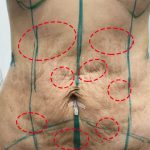
- Pinchable, soft fullness → subcutaneous fat. The classic stubborn pocket. Responds to fat removal or fat-dissolving treatments.
- Loose, hanging skin (common after major weight loss or pregnancy) → skin laxity. Removing fat alone can make this look worse; skin-tightening needs to be part of the plan.
- A firm, protruding belly that doesn’t pinch → often visceral fat (around the organs) or weakened abdominal wall. Visceral fat responds to lifestyle change, not liposuction — an honest clinic will tell you this during consultation.
A proper in-person or online consultation should identify which of these you’re dealing with before recommending anything.
Treatment Options in Korea
Korea has become a global destination for body contouring precisely because the options go far beyond “just liposuction.” The right choice depends on the area, the amount of fat, skin quality, and how much downtime you can accept.
— place at the start of this section.
5D liposculpture (surgical, precise)
The most targeted option for defined stubborn pockets — abdomen, flanks, arms, chin. Unlike traditional liposuction, which removes volume, 5D liposculpture carves around the underlying musculature for natural shadowing and definition (the technique behind the “11-line abs” look popular in Korea). Best for: people near their goal weight with specific pockets that won’t shift. Downtime is typically days, not weeks, with a compression garment.
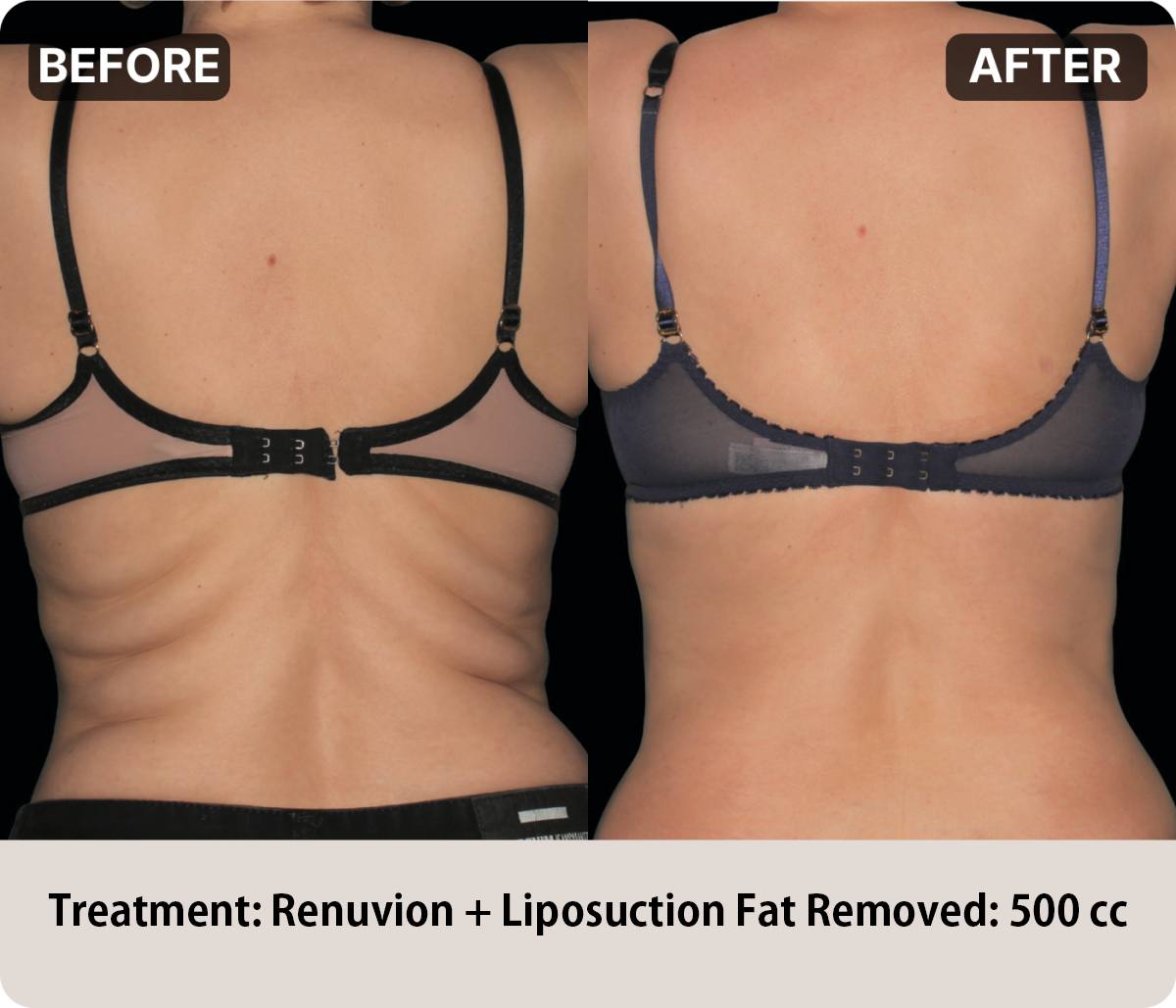
Renuvion / skin-tightening-assisted liposuction (surgical)
For patients who have both stubborn fat and mild skin laxity — the combination that liposuction alone can leave looking deflated. The device tightens skin from underneath during the same procedure.
Fat-dissolving injections (non-surgical, subtle)
Best for small areas — double chin, jawline, small flank or bra-line pockets. A series of sessions over several weeks; results are gradual and subtle rather than dramatic.
Muscle-toning technologies — Emsculpt / HIFEM (non-surgical)
These don’t remove fat directly; they build the muscle underneath it. Useful when the issue is softness and lack of definition rather than a true fat pocket — and often combined with fat-removal treatments for a finished look.
What about non-invasive fat freezing or radiofrequency?
These can modestly reduce small pockets with no downtime, but results are less predictable and less dramatic than surgical options. They’re reasonable for someone who wants a subtle change and accepts that one session rarely finishes the job.
Why Patients Come to Korea for This
Three reasons come up in nearly every international consultation: technique specialization (Korean clinics perform body-contouring at a volume that builds rare expertise in finesse work like 5D sculpting), cost (typically a fraction of US or European prices for the same procedures), and aftercare infrastructure (purpose-built recovery support — compression therapy, lymphatic management, hyperbaric oxygen — that shortens downtime).
The honest caveat: Korea’s density of clinics means quality varies enormously. Surgeon specialization, facility accreditation, and before/after work in your body type matter far more than price.
Frequently Asked Questions
Q: Why is lower belly fat the hardest to lose?
A: Lower abdominal fat cells are dense with alpha receptors that resist fat release, and genetics direct fat storage there — especially with age-related hormonal shifts. It’s the last area diet and exercise reach, which is why it’s the most common treatment area worldwide.
Q: Can you get rid of stubborn fat without surgery?
A: For small pockets, yes — fat-dissolving injections or non-invasive devices can produce modest, gradual improvement. For defined, lasting removal of a true stubborn pocket, surgical options like 5D liposculpture remain the most effective and predictable.
Q: Will the fat come back after liposculpture?
A: The removed fat cells don’t regenerate in the treated area. Remaining cells elsewhere can still expand with significant weight gain, which is why maintaining a stable weight protects the result long-term.
Q: How do I know if I need fat removal or skin tightening?
A: Pinch the area: soft, pinchable fullness is fat; loose, hanging tissue is laxity. Many patients — especially after weight loss or pregnancy — need both addressed together. A consultation should assess this before any treatment plan.
Q: Is it safe to combine liposculpture with other procedures?
A: Commonly, yes — abdomen with flanks, or chin with jawline contouring, are frequently treated together. Your surgeon will advise based on total treatment time and your health profile.
Q: How long is recovery after 5D liposculpture in Korea?
A: Most international patients return to desk work within a few days and fly home within 1–2 weeks. Compression garments are worn for several weeks, and final contour refines over 2–3 months.
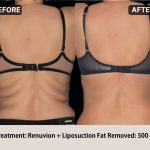
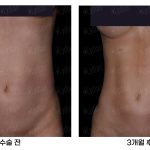
Real Results: Before & After
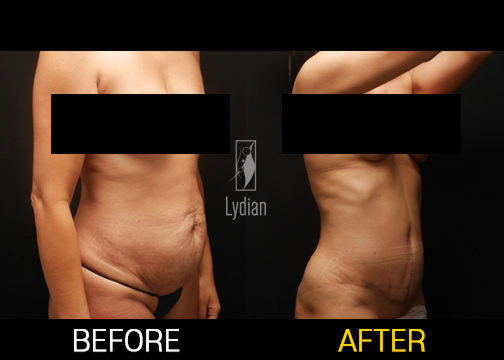
Results like these are why patients travel to Korea: the goal isn’t just less fat, but a natural, proportionate contour that diet and exercise alone couldn’t produce.
Considering Treatment in Seoul?
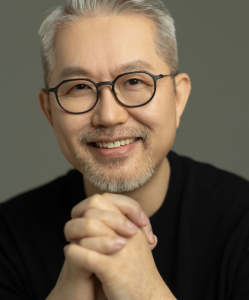
At Lydian Clinic in Seoul, Dr. Abraham An specializes in precision body contouring — including 5D liposculpture for stubborn fat pockets — for local and international patients, with English-language consultations and structured aftercare. Book a consultation to find out which option fits your body and goals.
Medical disclaimer: This article is for informational purposes only and is not a substitute for professional medical advice, diagnosis, or treatment. Always consult a qualified surgeon about your individual situation.