
 English
 日本語
日本語 中文网站(繁体)
 Русский
 Bahasa Indonesia
 ภาษาไทย
 Tiếng Việt
 대한민국
대한민국
The Short Answer
Traditional liposuction makes an area smaller. 5D liposculpture makes it smaller and more defined. Traditional liposuction removes fat volume from the deeper layer fairly evenly — excellent for debulking stubborn pockets. 5D liposculpture (high-definition sculpting) goes further: it selectively thins the superficial fat layer and etches around the underlying musculature, creating the natural shadowing and lines — the “11-line abs” look, the tapered waist, the defined arm — that volume removal alone can’t produce. The trade-off is that 5D is far more technique-dependent: in skilled hands it looks athletic and natural; done bluntly, it can look uneven. If you want defined contour, not just less fat, 5D is the stronger option — provided the surgeon specializes in it.
What Traditional Liposuction Actually Does
Traditional liposuction — tumescent, power-assisted, or ultrasound-assisted — works in the deep fat layer. The surgeon makes small incisions, infuses tumescent fluid, and removes fat through a cannula in smooth, even passes. The goal is uniform volume reduction: the area gets smaller and the silhouette slims down.
It does this job well. For larger pockets — flanks, outer thighs, a fuller abdomen — it remains the workhorse. What it deliberately does not do is touch the superficial fat layer just under the skin, because aggressive work there risks waviness and contour irregularities. The result: a smoother, smaller version of the same shape — but not a redefined one.
What 5D Liposculpture Adds
5D liposculpture (also called high-definition liposuction) starts where traditional liposuction stops. The “5D” refers to sculpting in three dimensions plus the way the result moves and settles over time — dynamic, athletic contour rather than a static reduction.
The technical differences:
- Two-layer approach. Fat is removed from the deep layer (like traditional lipo) and the superficial layer is selectively thinned to reveal the muscle lines underneath.
- Etching. The surgeon deliberately carves negative space around anatomical landmarks — the vertical lines of the rectus abdominis, the oblique transitions, the deltoid-pec separation in men — the way a sculptor defines form by removing material around it.
- Skin retraction. Because the superficial layer is treated, 5D techniques are typically paired with energy devices (such as Renuvion, which Dr. An routinely pairs with 5D sculpting at Lydian Clinic) that tighten the skin from underneath in the same procedure — important, because defined contour over loose skin looks worse, not better.
The result patients describe: not “I look thinner” but “I look like I train.” The famous Korean “11-line abs” (the two vertical lines framing the abdomen) and the tapered waist-to-hip transition are 5D products, not traditional-lipo products.
The Honest Comparison
Natural results: 5D wins — when done by a specialist. The definition follows your actual anatomy, so it reads as athletic rather than operated-on. But this is the critical caveat: 5D’s precision is entirely surgeon-dependent. A surgeon who treats 5D like traditional lipo with extra passes will produce exactly the irregularities the technique is meant to avoid. Ask to see before-and-after work in your body type and your target area — not just the clinic’s best abdomen.
Volume removal: Roughly equal for moderate pockets; traditional lipo has the edge for large-volume debulking, where definition isn’t the goal.
Downtime: Comparable. Both are outpatient procedures. Most patients return to desk work within a few days, wear compression garments for several weeks, and see the final contour refine over 2–3 months as swelling resolves. 5D can involve slightly more swelling in the etched areas early on.
Scarring: Both use small incisions (a few millimeters) placed in natural creases. No meaningful difference.
Cost in Korea: 5D typically costs more than traditional liposuction at the same clinic — you’re paying for the surgeon’s sculpting time and specialization, not just the fat removal. Korea’s prices run a fraction of US or European equivalents for both techniques, which is why international patients combine the procedure with a 1–2 week Seoul stay.
Longevity: Identical principle — removed fat cells don’t regenerate in the treated area. Remaining cells elsewhere can expand with significant weight gain, so a stable weight protects the investment either way.
Who Should Choose Which
Choose 5D liposculpture if: you’re already near your goal weight, you have good skin elasticity, and what bothers you is shape and definition — the soft abdomen that hides the muscle underneath, the waist without taper, the arms without line. This is the athletic-contour patient.
Choose traditional liposuction if: the priority is volume — larger pockets where the goal is a smaller silhouette rather than visible definition — or if budget is the deciding factor and definition is a nice-to-have.
Consider neither (yet) if: there’s significant skin laxity without a tightening plan (fat removal alone can worsen the look), the concern is visceral fat (the firm, non-pinchable belly — that responds to lifestyle, not a cannula), or weight is still actively changing. An honest consultation will say this plainly.
Why Surgeon Selection Matters More for 5D
Traditional liposuction is a mature, forgiving technique — outcomes across experienced surgeons cluster fairly tightly. 5D is not forgiving. The difference between natural athletic definition and visible over-etching is millimeters of judgment, repeated hundreds of times across the treatment area.
What to look for: a surgeon whose practice is concentrated in body contouring (not a generalist who does some lipo), a portfolio of before-and-after results in your body type, and a consultation that discusses your musculature and skin quality — not just your fat. Korean clinics performing body contouring at high volume have built unusual depth in this finesse work; it’s one of the structural reasons patients travel to Seoul for it.
At Lydian Clinic, Dr. Abraham An has spent 23+ years focused on body contouring, performing over 20,000 procedures — the kind of concentrated specialization that 5D work demands.
Frequently Asked Questions
Q: Is 5D liposculpture the same as high-definition liposuction?
A: Yes — “5D liposculpture,” “high-definition liposuction,” and “HD lipo” describe the same family of techniques: two-layer fat removal with muscular etching for defined, athletic contour, as opposed to uniform volume removal.
Q: Does 5D liposculpture hurt more than traditional liposuction?
A: The procedures use the same anesthesia approaches, and most patients report soreness rather than sharp pain with either. 5D can produce slightly more swelling in the etched areas during the first two weeks, but the recovery timeline is comparable.
Q: Can 5D liposculpture fix a previous bad liposuction result?
A: Often, yes — revision work is one of the strongest use cases for sculpting techniques, since the problem is usually unevenness or lack of definition rather than excess volume. It requires a surgeon experienced in revision specifically; the scar tissue from the first procedure changes the technique.
Q: How long do 5D liposculpture results last?
A: The sculpted contour is long-lasting — removed fat cells don’t come back. But the definition is still your body: significant weight gain, pregnancy, or major muscle loss will change what the contour sits on. Stable weight and normal activity preserve it for years.
Q: Will people be able to tell I had it done?
A: That’s the point of the technique — 5D done well reads as fitness, not surgery. The definition follows your real anatomy. Overdone or uneven work is what looks operated-on, which is why surgeon selection is the whole decision.
Q: Can 5D liposculpture be combined with skin tightening?
A: It’s routinely paired with energy-based skin tightening (such as Renuvion) in the same procedure, especially for the abdomen and arms. Treating the superficial layer without addressing skin quality is one of the common causes of disappointing 5D results.
Real Results: Before & After
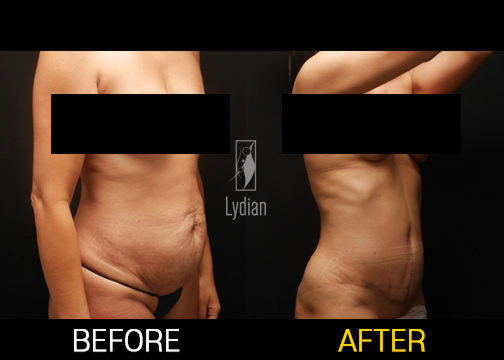
5D liposculpture abdomen before and after at Lydian Clinic.
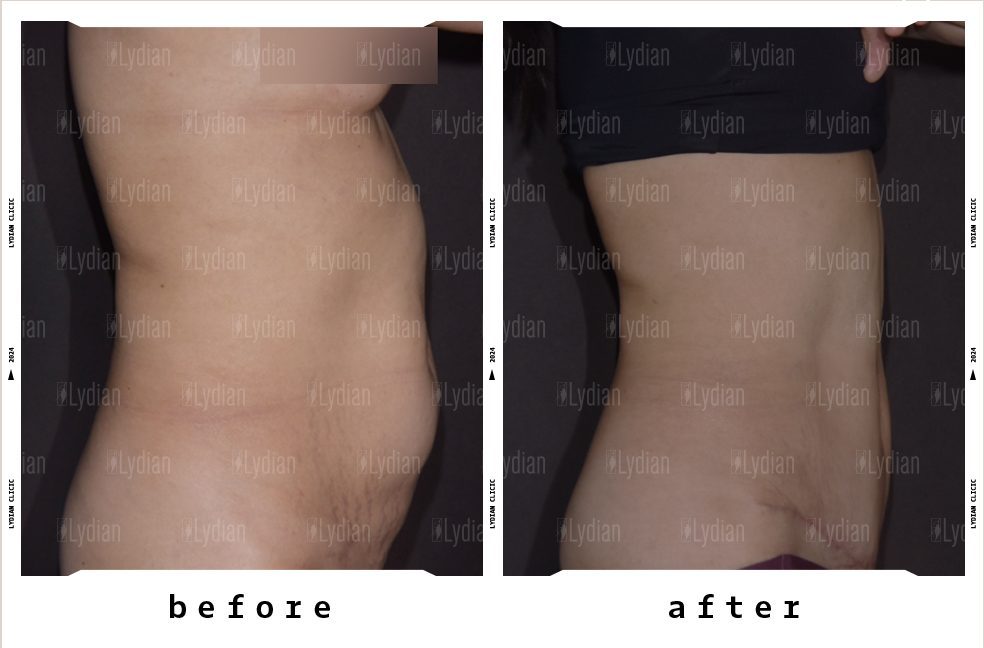
Female liposuction before and after at Lydian Clinic.
About Dr. Abraham An

“Liposuction isn’t just removal—it’s design.”
— Dr. Abraham An, Founder of Lydian Clinic
Dr. Abraham An brings 23+ years of body-contouring expertise and 20,000+ procedures to every treatment plan at Lydian Clinic in Seoul — specializing in precision techniques like 5D liposculpture for local and international patients, with English-language consultations and structured aftercare.
Considering Treatment in Seoul?
The right technique depends on your body, your skin, and what “natural” means to you. Book a consultation at Lydian Clinic in Seoul for an honest assessment of whether 5D sculpting or traditional liposuction fits your goals.
Medical disclaimer: This article is for informational purposes only and is not a substitute for professional medical advice, diagnosis, or treatment. Always consult a qualified surgeon about your individual situation.