
 English
 日本語
日本語 中文网站(繁体)
 Русский
 Bahasa Indonesia
 ภาษาไทย
 Tiếng Việt
 대한민국
대한민국
Nobody books liposuction for the recovery. But the recovery is the part that actually determines how good your result looks — and it’s the part most clinics describe in suspiciously vague terms. “Mild discomfort.” “Minimal downtime.” Sure.
Here’s what it actually feels like, week by week, based on what thousands of patients have reported and what surgeons at Lydian Clinic tell people in consultation.
Week 1: The Hard Days
Let’s not sugarcoat it. The first 72 hours after liposuction are genuinely uncomfortable. You’ll be sore — not sharp pain, more like the worst muscle ache of your life, as if you did an extreme workout while being hit by a truck. The anesthesia wears off, swelling sets in, and you’ll feel bruised and tender in every treated area.
Days 1–3: You’ll have drainage. Small incisions leak a pinkish fluid (tumescent fluid mixed with a little blood) for 24–48 hours. Clinics give you absorbent pads for this. It’s normal, not alarming, but it surprises people who weren’t warned. You’ll wear a compression garment 24/7 — it feels tight and restrictive, but removing it in the first week makes swelling significantly worse.
You’ll be up and walking the same day. This isn’t optional encouragement — walking prevents blood clots and actually reduces swelling. Short, slow walks around your hotel room or the clinic hallway. No stairs marathons.
Pain medication handles most of it. Most patients describe days 1–3 as a 5–6 out of 10, dropping fast after that.
Days 4–7: The turning point. Drainage stops. You can shower (lukewarm water, pat dry, garment goes right back on). Bruising is at its most dramatic — purples, yellows, greens — and you’ll look worse than you feel. This is when most international patients start venturing out for short walks in the neighborhood. You’ll still be moving carefully, but the “I regret this” feeling from day 2 starts fading.
What you can do: Walk. Work from a laptop. Short outings.
What you can’t: Lift anything heavy, exercise, sleep on treated areas without the garment, take baths or go swimming.
Weeks 2–3: Turning the Corner (and Peak Swelling)
Here’s the part nobody warns you about: swelling often peaks in week 2 or 3, not week 1. You’ll wake up one morning around day 10–14 and think you look bigger than before surgery. You don’t — it’s fluid. But it’s demoralizing if you don’t expect it.
This is also when the itching starts. As nerves wake up and bruises heal, treated areas itch intensely. It’s a good sign (healing), but it’s maddening. Loose clothing helps. Scratching through the garment is fine; scratching bare healing skin is not.
By week 3, most of the soreness is gone, replaced by numbness and firmness. Treated areas feel hard or lumpy under the skin — like there are ridges or cords underneath. This is completely normal. It’s internal scar tissue forming, and it softens over the coming weeks. Lymphatic drainage massage (your clinic can arrange this) helps break it up faster.
Garment update: Still 24/7 for most surgeons through week 3, then many allow you to drop to 12 hours a day (nights or daytime, your surgeon’s preference).
What you can do: Desk work comfortably. Longer walks. Light daily activities. Most people return to office jobs in week 2.
What you can’t: Running, gym workouts, anything that bounces or strains the treated areas.
Weeks 4–6: Back to Normal? Almost.
By week 4, you’ll feel mostly like yourself. The garment comes off for longer stretches. Bruising is gone. The hard lumps are softening. You can see the beginnings of your actual result — though it’s still blurred by residual swelling.
This is when people get impatient and overdo it. The classic mistake: feeling great at week 4, going for a run, and waking up the next day swollen like it’s week 2 again. Your tissues are still healing internally even when the surface feels fine. Ease back into exercise — walking, then light cardio, then weights. No high-impact stuff until your surgeon clears you, usually around week 6.
Swelling pattern from here: It comes and goes. You’ll look slimmer in the morning, puffier by evening — especially after salty food, long flights, or standing all day. This on-and-off swelling continues for months. It’s normal and it gradually fades.
What you can do: Light exercise (week 4), progressively harder workouts (weeks 5–6 with clearance). Travel comfortably. Sleep in any position.
What you can’t: Contact sports, very heavy lifting, or anything your surgeon hasn’t cleared.
Months 2–3: The Real Result Emerges
Somewhere between month 2 and month 3, you’ll catch your reflection and realize — oh, this is what I paid for. The swelling that blurred everything is mostly gone. The contour is visible. Clothes fit differently.
But it’s not the final result yet. Deep tissue remodeling continues for up to 6 months, and in some cases a full year for larger-volume procedures. Small asymmetries even out. Any remaining firmness dissolves. Skin continues to retract — this is especially relevant if you had Renuvion or another skin-tightening technology added, since collagen remodeling takes 3–6 months to fully develop.
What speeds healing: Staying hydrated. Wearing the garment as directed (yes, still, even when you’re sick of it). Lymphatic massage in the first month. Not smoking — nicotine constricts blood vessels and measurably slows healing. Walking daily.
What slows it: Smoking or vaping. Skipping the garment. Going back to intense exercise too early. Salty diet in the first month. Ignoring your follow-up appointments.
Red Flags vs. Normal Symptoms
Most of what feels alarming during recovery is normal. But some things aren’t. Know the difference.
| Normal (uncomfortable but expected) | Call your surgeon immediately |
|---|---|
| Bruising, swelling, numbness | Fever above 38.5°C (101.3°F) |
| Pinkish drainage for 48 hours | Foul-smelling or green/yellow drainage |
| Itching as nerves heal | Increasing redness spreading from incisions |
| Hard lumps under the skin (weeks 2–6) | One leg dramatically more swollen than the other |
| Asymmetric swelling that shifts day to day | Severe pain that suddenly worsens after improving |
| Feeling emotional or regretful (week 1–2) | Shortness of breath or chest pain |
Post-surgical blues are real. Anesthesia, pain meds, swelling, and the stress of surgery combine into a low mood around days 3–5 for a lot of patients. It passes. If it doesn’t pass after two weeks, talk to someone.
Tips for International Patients Recovering in Seoul
Stay 7–10 days minimum. This covers stitch removal (typically day 5–7), your first follow-up to check healing, and enough buffer that you’re not flying while still significantly swollen.
Book a hotel, not an Airbnb. You want an elevator, a front desk that can help in an emergency, and housekeeping.
The flight home: Wear your compression garment on the plane. Get up and walk every 1–2 hours — this is non-negotiable for clot prevention after surgery. Book an aisle seat if you can.
Follow-up from home: A good clinic gives you a direct contact — not a generic email — for post-op questions after you fly home. Ask about this before you book, not after you land.
Frequently Asked Questions
How long until I can go back to work after liposuction?
Desk work: most people manage by day 5–7, comfortably by week 2. Physical jobs involving lifting or standing all day: plan for 2–3 weeks.
When can I exercise again after liposuction?
Walking starts day 1. Light cardio from week 3–4. Weights and running from week 6 with your surgeon’s clearance. If an activity makes swelling noticeably worse the next day, you did it too soon.
How long do I have to wear the compression garment?
Typically 4–6 weeks total: 24/7 for the first 2–3 weeks, then 12 hours a day. It’s the single biggest factor in how smooth your final contour looks.
Is it normal to still be swollen 2 months after liposuction?
Yes. Residual swelling is normal through month 3 and sometimes month 6. If one specific spot stays hard and swollen while everything else has settled, mention it at your follow-up.
Can I fly home a week after liposuction?
For most body procedures, 7–10 days is the standard recommendation. Wear compression on the flight, walk every 1–2 hours, and stay hydrated.
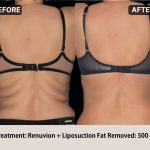
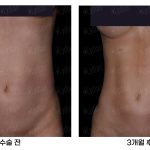
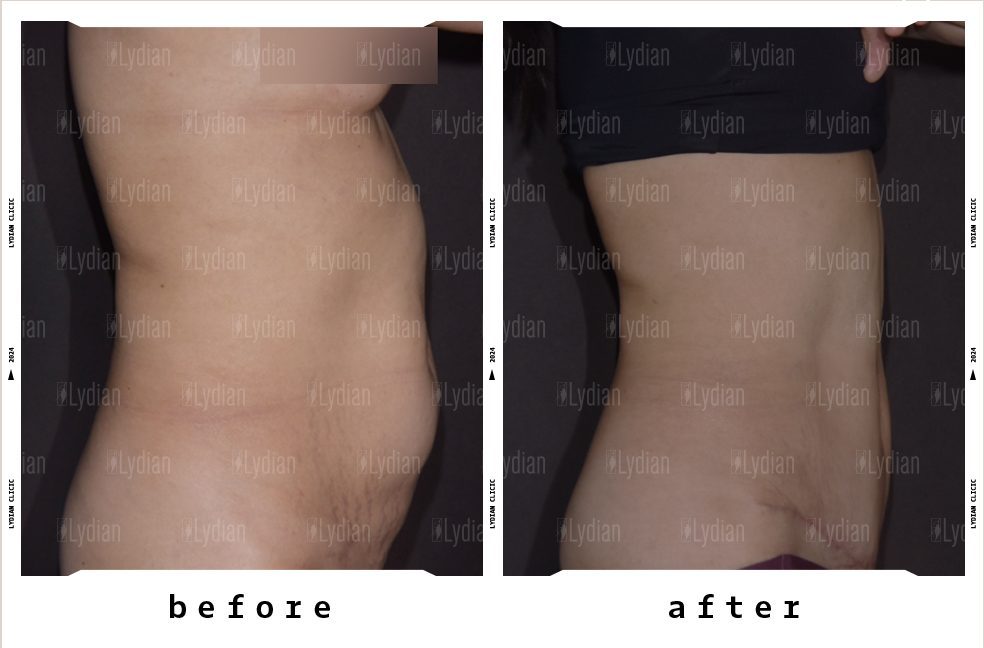
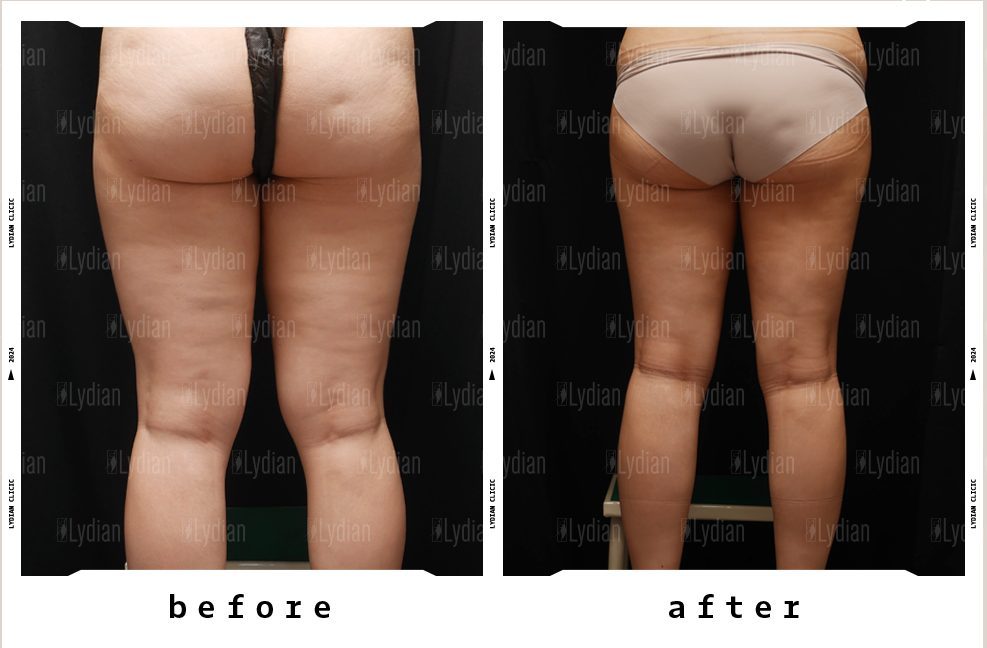
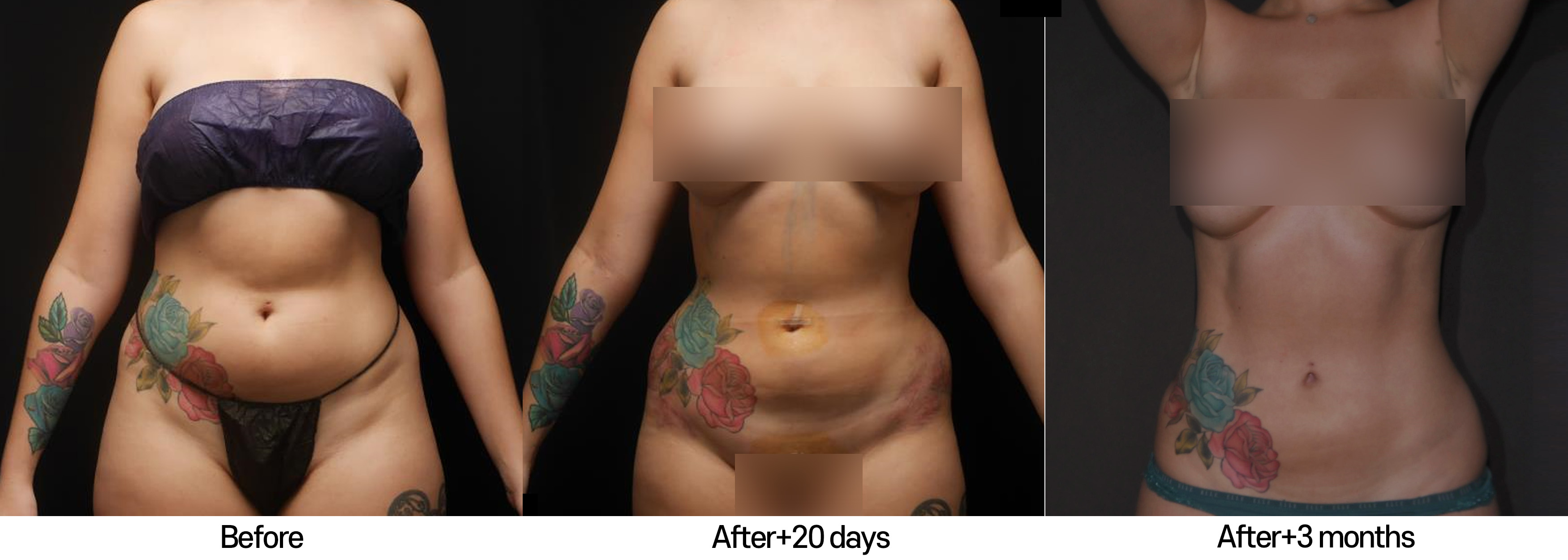
Before & After: Liposuction Results at Lydian Clinic
About Dr. Abraham An
Dr. Abraham An is the founder of Lydian Clinic in Seoul’s Gangnam district, with over 23 years of experience and more than 20,000 procedures performed. His practice is concentrated in body contouring — including the 5D liposculpture technique he developed — and every surgery at the clinic is performed by him personally, not delegated.
Planning liposuction in Korea? Contact Lydian Clinic for a personalized consultation.